
India and China: From Divergence to Strategic Convergence
How U.S. Tariffs Could Forge an Unlikely Partnership

Trump’s Trade Offensive Creates Space for an Unlikely India-China Rapprochement
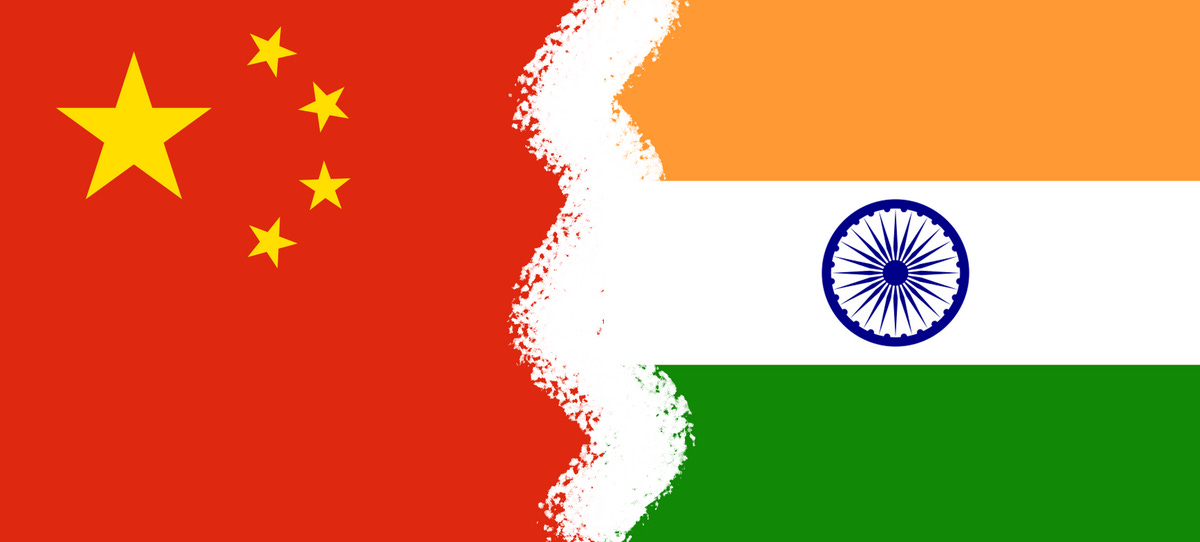
In August 2025, President Trump unleashed a sweeping set of tariffs aimed particularly at India—bringing total duties to a staggering 50%, levied in response to New Delhi’s continued imports of Russian oil—while China, despite being the world’s largest importer of Russian oil, has notably avoided similar immediate penalties (dw.com, m.economictimes.com). This asymmetric policy calculus, paired with aggressive American trade posturing, is unintentionally nudging the traditionally adversarial neighbors, India and China, toward a pragmatic re-engagement—one that could hold profound implications for regional multipolarity and global economic stability.
Geopolitical Shocks and Shared Realities
Trump’s tariffs appear to do more than protect American industry—they dissolve the illusion of dependable alliances. India, a key participant in the Quad with the U.S., Japan, and Australia, now finds its strategic leverage fraying as its economic interests are penalized (apnews.com). Meanwhile, Beijing monitors the volatility with cautious advantage, mindful that its own energy trade with Russia makes it vulnerable to future tariff hikes or other punitive trade measures (barrons.com). Both capitals face a shared impasse: can they rely on Washington as a stable partner, or is it time to hedge bets by rekindling bilateral ties?
A Diplomatic Thaw—and Its Limits
Recent weeks have witnessed promising signs of a thaw. India’s National Security Advisor, External Affairs Minister, and Defense Minister are slated for strategic talks, and Prime Minister Modi will visit China—the first such trip in seven years (reuters.com). Yet beneath these gestures lie deep-run tensions: a $99 billion trade deficit, border skirmishes, and reciprocal distrust persist (reuters.com). Still, the impending Trump-induced trade turbulence creates a rare opening: a moment of mutual need, where cooperative frameworks could take root, even if imperfectly.
Pragmatism Over Hostility: Why Cooperation Makes Sense
Mutually Reinforcing Energy Security
Both countries rely heavily on Russian oil to secure affordable energy. In the face of American tariff pressures, forging a bilateral energy coordination—or simply agreeing to mutual restraint against more damaging competitive practices—could stabilize markets and create a buffer against U.S. coercion (dw.com).Strengthening the BRICS Bloc
Trump’s tariff targeting of India (and Brazil) could act as a catalyst for deeper BRICS solidarity (reuters.com). A more coordinated BRICS—including China’s economic heft and India’s emerging tech and service strengths—could serve as a genuine counterweight to unilateral U.S. trade pressure.Economic Interdependence as Leverage
China and India remain deeply entangled economically—bilateral trade has long been substantial despite imbalances. Renewed cooperation in supply-chain resilience, tech collaboration, and infrastructure investment (think cross-border corridors, joint manufacturing ventures) could mitigate disruption and build alternatives to Western-dominated trade networks (en.wikipedia.org).Diplomatic Normalization as Stability Mechanism
Reviving defense communication channels—through instruments like the 2013 Border Defence Cooperation Agreement—would temper border tensions and prevent escalation amid external economic pressures (washingtonpost.com, en.wikipedia.org). Stabilizing the border allows both nations to invest diplomatic capital in broader regional or even global strategic coordination.
The Cautionary Case for Pragmatism
India and China both remain wary. Domestic politics in both countries, border memory, and security concerns demand vigilance. But the existential threat posed by erratic tariff policies is spurring a re-evaluation of what “strategic autonomy” truly means. It no longer just implies balancing against historical rivals—it now includes buffering against unpredictable allies.
In this light, a moderated “Elephant-Dragon” rapprochement—characterized by cautious engagement rather than full embrace—makes strategic sense (economictimes.indiatimes.com). It’s not a grand entente but a central-pivoting motion toward regional resilience.
Conclusion: Toward a New Multipolar Equilibrium
The Trump administration’s tariffs are dangerous—but they also reveal a paradox: in seeking to isolate or discipline individual countries, Washington risks pushing them into each other’s arms. India and China, long locked in strategic rivalry, now face a shared dilemma that demands a shared response. They can choose to drift further under U.S. economic pressure—or they can choose to realign pragmatically, rebuilding a fragile but vital foundation for regional autonomy.
If they do so wisely—by blending diplomacy with economic diversification and limited institutional cooperation—they won't simply survive the turbulence. They might just redraw the lines of the global order.